


Maze Digital completely transformed our product experience. The new UX is not only visually polished but significantly improved our user engagement and conversions.
PS
Priya Sharma
Product Manager
From SaaS MVP to enterprise-grade platform, we architect and build B2B SaaS products that scale. Multi-tenancy, Stripe subscriptions, team management, admin dashboards, and public APIs. 50+ products delivered. You own 100% of the code and infrastructure.
Share your project details – scope, timeframes, or challenges. We respond within 4 business hours.
Trusted by Global Brands, Across Every Industry
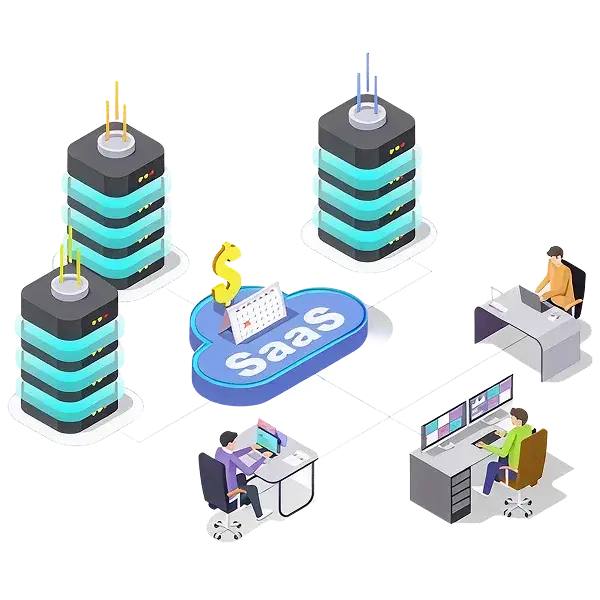
B2B SaaS (Business-to-Business Software as a Service) is a cloud-based software delivery model where businesses pay a recurring subscription fee to access software hosted on the provider’s infrastructure, rather than purchasing a perpetual license or installing software locally. The global B2B SaaS market reached $317 billion in 2024 and is projected to exceed $820 billion by 2030 (Statista).
…
WHAT WE BUILD
From architecture design and SaaS MVP to an enterprise-grade platform with white-labeling, API, and compliance, we cover every phase of the SaaS product lifecycle.
We build production-ready B2B SaaS platforms from scratch, including multi-tenant architecture, subscription billing, team management, role-based access, and a customer-facing API. Every platform is built on Next.js, Node.js, and PostgreSQL with a clean domain-driven architecture that scales to enterprise customers without a rewrite.
Get a Quote
We design and implement multi-tenant data architectures tailored to your compliance requirements, customer count, and data sensitivity. We evaluate row-level security with shared schema, schema-per-tenant, and database-per-tenant approaches and recommend the right model. Every architecture we design includes a documented tenant isolation strategy and security review before implementation begins.
Get a Quote
We implement a complete Stripe billing infrastructure: subscription plans and pricing tables, usage-based billing with metered subscriptions, trial periods with automatic conversion, proration for mid-cycle upgrades and downgrades, coupon and discount management, dunning automation for failed payment recovery, Stripe Customer Portal for self-service billing, and webhook handling for every subscription lifecycle event.
Get a Quote
We design and build the complete customer-facing SaaS dashboard, the product screen where users spend the most time, and the internal admin panel where your team manages customer accounts, flags churning customers, applies plan changes, and monitors platform health. Every dashboard is designed in Figma for information hierarchy and conversion before any code is written.
Get a Quote
Enterprise B2B buyers require API access to integrate your SaaS into their existing tool stack. We build public RESTful or GraphQL APIs with API key authentication, rate limiting, versioning, comprehensive OpenAPI 3.0 documentation, a developer portal, and webhook subscriptions for real-time event delivery, the infrastructure enterprise sales teams need to close larger deals.
Get a Quote
We build white-label SaaS architectures where each customer organization can apply their own branding, custom domain routing with wildcard DNS and per-tenant SSL, dynamic theme token injection, branded email sending via custom SPF and DKIM configuration, and a white-label reseller tier if your business model includes partner channel distribution.
Get a Quote
Every B2B SaaS platform we build is designed around these four non-negotiable architectural pillars from the first line of code.

Data isolation between customer organizations using PostgreSQL row-level security policies. Every database query automatically filters to the authenticated tenant’s data, no application-level filtering mistakes that could expose customer data across tenants. Tested with penetration testing before launch.

Stripe Billing as the revenue engine: subscription plans with monthly and annual pricing, usage-based metered billing, trial periods with automatic conversion, proration for plan changes, dunning sequences for payment recovery, and a self-service customer portal for plan upgrades and invoice downloads.

Granular RBAC with organization-level roles (Owner, Admin, Member, Viewer), resource-level permissions, and feature access gated by subscription plan. Access control is enforced at the API layer and database layer simultaneously, not just in the UI, so permission bypass via direct API calls is structurally impossible.

The SaaS frontend and backend communicate exclusively through a versioned public API, meaning the same API your dashboard uses is available to enterprise customers for integrations. OpenAPI 3.0 documentation, API key management, rate limiting per plan tier, and webhook delivery for real-time event notifications.
Platform Features
Enterprise B2B buyers have a checklist. Our SaaS platforms are built to check every box on it, from SSO to audit logs to SOC2-ready data handling.
Complete organization management, including team member invitations via email with magic link or sign-up flow, role assignment, seat management with billing integration, organization settings, member removal, and audit log of team membership changes. Enterprise customers can self-manage their team without contacting your support team.
Flexible authentication including email and password, social login (Google, Microsoft, GitHub), magic link email-only login, and enterprise Single Sign-On (SSO) via SAML 2.0 and OAuth for customers using Okta, Azure AD, or Google Workspace. SSO is a deal-breaker for mid-market and enterprise buyers and a table-stakes enterprise feature.
Customer-facing usage dashboards showing plan consumption, feature adoption, team activity, and billing history. Internal analytics dashboards showing MRR, ARR, churn rate, activation rates, DAU/MAU, and feature adoption by cohort, the data your growth team needs to identify expansion and churn risk at the individual customer level.
Immutable, tamper-evident audit logs recording every user action, API call, permission change, and billing event in the system. Queryable audit logs are required by SOC2, HIPAA, and enterprise security teams for compliance reporting. We implement audit logging at the middleware layer so no database write bypasses the audit trail.
Enterprise and agency customers often need your SaaS to appear under their own domain. We implement custom domain routing with automatic SSL certificate provisioning via Let’s Encrypt, per-tenant branding with color themes and logo injection, and branded transactional emails sent from the customer’s verified sender domain.
Enterprise buyers require data portability as a contractual term. We implement full customer data export in CSV and JSON formats, schedule automated data exports to customer-owned S3 buckets, and API-based data retrieval for migration or backup purposes, the infrastructure that closes security-conscious enterprise deals.
Native integrations with the tools your enterprise buyers already use: Salesforce, HubSpot, Slack, Microsoft Teams, Zapier, and Make. We build integrations via OAuth, and for Zapier and Make we build published trigger and action modules so your customers can connect your SaaS to any tool in their stack without code.
SOC2 Type II-ready infrastructure including encryption at rest (AES-256) and in transit (TLS 1.3), secrets management via AWS Secrets Manager, vulnerability scanning in CI/CD, dependency audit pipelines, GDPR Article 25 data minimization, and the technical documentation your security review team needs for enterprise sales cycles.
Multi-channel notification infrastructure covering in-app notifications, email notifications via transactional email provider (Resend, Postmark), webhook delivery to customer endpoints, and Slack or Teams integration for team alert routing. Customers configure their own notification preferences per-user and per-channel without engineering involvement.
We instrument every SaaS platform we build to track the metrics your investors, board, and growth team will ask about from day one. Here is what each metric means and why it matters.

The total predictable revenue generated from active subscriptions in a given month. MRR is the primary health metric for any subscription business. We build MRR dashboards that break down New MRR (from new customers), Expansion MRR (from upgrades), Contraction MRR (from downgrades), and Churned MRR (from cancellations) the four movements that explain MRR change month over month.
Tracked via Stripe + custom analytics
The total predictable revenue generated from active subscriptions in a given month. MRR is the primary health metric for any subscription business. We build MRR dashboards that break down New MRR (from new customers), Expansion MRR (from upgrades), Contraction MRR (from downgrades), and Churned MRR (from cancellations) the four movements that explain MRR change month over month.
Health score alerts built in
The percentage of new signups that reach your product’s activation milestone, the moment when they first experience the core value. A low activation rate means your onboarding flow is losing customers before they understand why they should pay. We instrument activation events from day one and build onboarding analytics dashboards so you can identify and fix activation drop-off points with data.
Mixpanel funnel tracking
The total revenue generated from a customer over their entire relationship with your product. LTV is calculated as Average Revenue Per Account (ARPA) divided by Churn Rate. The LTV to CAC ratio is the core unit economics metric: if LTV is three times CAC or higher, your SaaS business model is fundamentally sound. We build LTV cohort analysis into the admin analytics dashboard.
Cohort analysis dashboard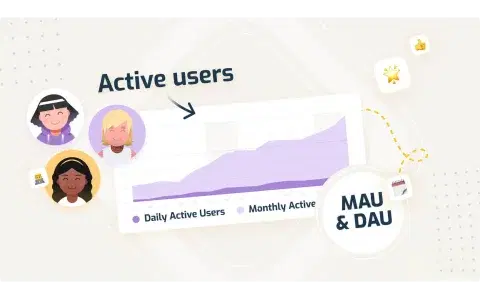
The ratio of daily to monthly active users measures engagement stickiness. A high DAU/MAU ratio indicates users are returning frequently a sign of genuine product value and low churn risk. We instrument DAU and MAU with custom event tracking per feature so you can see not just how many users are active, but which features are driving daily engagement and which are being ignored.
Feature-level engagement tracking
Net Promoter Score measures customer satisfaction and likelihood to recommend your product. We integrate in-app NPS surveys that appear at the right moment in the user journey, collect responses, and route promoter responses to a referral program flow, detractor responses to a customer success alert, and all responses to a centralized NPS dashboard for trend tracking.
In-app survey integrationTechnology Stack
We use a proven, enterprise-validated SaaS stack. Every technology choice is made for long-term maintainability, scalability, and the ability to hire engineers who know these tools.
We have built 50+ SaaS products across healthcare, staffing, construction, and productivity verticals. Here is what makes our approach different.
50
B2B SaaS Products Shipped
100%
TypeScript, Type-Safe End to End
4.9
Clutch Rating from SaaS Clients
$0
Data Isolation Incidents Across Portfolio
50
B2B SaaS Products Shipped
100%
TypeScript, Type-Safe End to End
4.9
Clutch Rating from SaaS Clients
$0
Data Isolation Incidents Across Portfolio
We design the multi-tenant data model, API contract, RBAC permission matrix, and billing architecture before writing code. Getting these decisions wrong early creates technical debt that takes months to fix. We solve them upfront with documented architecture decisions reviewed in the discovery phase.
Stripe is deceptively complex at scale, proration edge cases, webhook retry logic, dunning sequences, metered billing quotas, and plan migration paths all require careful implementation. We have integrated Stripe into 30+ SaaS products and know every edge case that causes billing failures that damage customer relationships.
We have never had a tenant data isolation failure across 50+ multi-tenant SaaS products. We achieve this through PostgreSQL row-level security policies enforced at the database layer, not just application middleware, meaning even a compromised API layer cannot serve cross-tenant data.
Every SaaS platform we build is fully typed TypeScript from database schema (via Prisma) through backend API routes to frontend React components. Shared type definitions between backend and frontend eliminate entire categories of runtime errors that appear in production, and make onboarding new engineers dramatically faster.
We instrument MRR, churn, activation, DAU/MAU, and feature adoption tracking into every SaaS platform from the first sprint. You launch with the data infrastructure to make evidence-based product decisions, not post-launch analytics retrofits that miss the first cohort’s behavior entirely.
We design SaaS architectures that support the MVP with 10 customers and the scaled product with 10,000 customers on the same codebase. Row-level security scales without architectural changes. Stripe scales infinitely. The API versioning strategy we implement from day one means you never break existing integrations when you add features.
Our Process
A structured, architecture-led process for building SaaS products that are secure, scalable, and ready for enterprise sales from launch.
We start with a structured SaaS discovery session where we define your Ideal Customer Profile (ICP), core jobs-to-be-done, pricing model (seat-based, usage-based, feature-tier, or hybrid), and the enterprise sales requirements that your architecture must satisfy from day one. We design the multi-tenant data model, select the tenancy isolation approach (row-level security vs schema-per-tenant), define the RBAC permission matrix, design the Stripe product and pricing catalog, and document the API contract. This architecture document is reviewed and signed off before any code is written.
With the architecture document approved, we design the full PostgreSQL database schema with row-level security policies, the complete API endpoint list with request and response types in TypeScript, the authentication flows (email, social, SSO), and the organization invitation and team management flows. We use Prisma to generate type-safe database client code from the schema before application code begins. This work-first approach prevents database migration emergencies during development sprints.
Our design team creates Figma designs for every SaaS screen: marketing landing page with pricing table, sign-up and onboarding flow, the core product dashboard, feature screens, team management and settings pages, billing management with plan upgrade and invoice download, and the internal admin panel. We design for information hierarchy and conversion at every stage, and deliver an interactive prototype for stakeholder approval before development begins.
Before launch, we run: end-to-end Playwright tests for all critical user flows, a multi-tenant penetration test specifically designed to verify cross-tenant data isolation, Stripe webhook simulation testing for all subscription lifecycle events, load testing with k6 to verify performance under expected peak traffic, and a security audit using OWASP Top 10 as the test framework. All P1 issues are resolved before production deployment.
Production Launch, Stripe Go-Live, and Ongoing Iteration We deploy to production on AWS or Vercel, activate Stripe billing in live mode, configure Datadog or New Relic for infrastructure monitoring, set up PagerDuty alerting for critical errors, and submit your domain to HSTS preload. Post-launch, we offer flexible retainer options for feature sprints, bug fixes, and performance optimization as your customer count grows. We also provide the SOC2 technical documentation package if you are pursuing compliance certification.
SaaS Case Studies
Real SaaS products. Real customers. Multi-tenant, Stripe-billed, and built to enterprise standards.
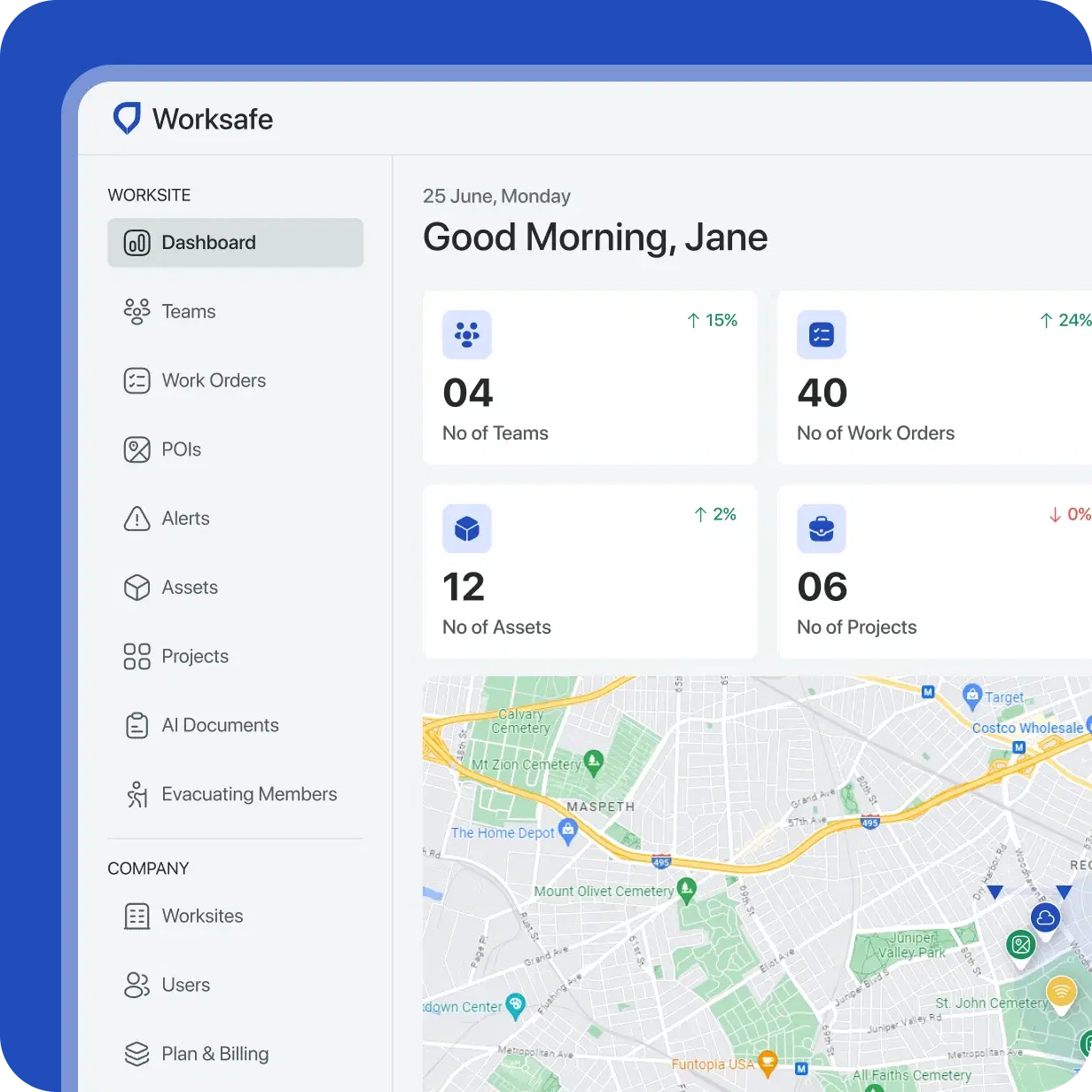
Construction • GIS Web App
A full-scale hazard management and asset tracking web platform for industrial power generation, petroleum, and construction environments. Real-time GIS mapping, work order management, and multi-site dashboards.
Faster Incident Reporting
User Adoption Rate

health care
An all-in-one mobile and web solution that helps vendors ensure compliance, minimize lost trays, eliminate late fees, and provide hospitals with full visibility into surgical trays.
Increase in Online Orders
Page Load Speed
Verified reviews from startup founders who went from idea to live product with Maze Digital.
Maze Digital completely transformed our product experience. The new UX is not only visually polished but significantly improved our user engagement and conversions.
Priya Sharma
Product Manager
Working with Maze Digital felt like having a strategic partner, not just a design team. They understood our business goals and translated them into a seamless user journey.
Jason
Marketing Manager
The level of detail in their UI/UX work is exceptional. From research to final design, everything was structured, thoughtful, and user-focused.
Omer
Founder & CEO
Free founder-focused guides from the Maze Digital team on building and launching MVPs.



Technical and business questions SaaS founders ask before starting a project, answered directly and in full.