
We Build AI Systems From the Model Layer Up

We are an AI development company, not a feature-plugging shop. We train custom models on your data, fine-tune frontier LLMs for your domain, build RAG pipelines over your knowledge base, and deploy them with production-grade MLOps infrastructure, RAGAS-evaluated accuracy, and LangSmith observability from day one.

Get a Free Project Estimate

Share your project details – scope, timeframes, or challenges. We respond within 4 business hours.

Detecting country…

We'll keep your info in our CRM to respond. For details, consult our privacy policy.

trusted by

50+ Enterprises and Startups Globally

What Is AI Development? And What Makes It Different from AI App Development

AI development is the full engineering lifecycle of creating artificial intelligence systems: collecting and structuring training data, designing or selecting model architectures, executing training runs or fine-tuning experiments on GPU infrastructure, evaluating model quality with domain-specific metrics, deploying models to production inference endpoints, and operating and improving models over time with MLOps practices. It is the work of building the AI system itself, not building a product wrapper around an existing API.

AI development at Maze Digital spans ten disciplines: custom AI model training on proprietary datasets using PyTorch and TensorFlow; LLM fine-tuning with LoRA (Low-Rank Adaptation) and QLoRA (Quantized LoRA) on models including GPT-5.5 mini, Claude Opus 4.7, Gemini 3.1 Pro, Llama 4 Scout and Maverick, and Mistral; RAG pipeline development grounding frontier LLMs in private data with Pinecone, Weaviate, and pgvector vector databases; computer vision model training for object detection, image classification, and semantic segmentation

Hero image
AI Development Services

Ten AI Development Disciplines We Execute End-to-End

We cover the full spectrum of production AI engineering, from raw dataset curation to fine-tuned model deployment, from RAG pipeline design to MLOps infrastructure and drift monitoring.

We build and train custom AI models from scratch on your proprietary datasets when no existing pre-trained model fits your domain. This includes dataset collection and curation, data labeling and quality engineering, model architecture selection (transformer, CNN, RNN, or hybrid), training run management on GPU clusters (A100, H100), hyperparameter optimization, and rigorous train/validation/test evaluation with domain-specific metrics. We train models for clinical text analysis, industrial defect detection, legal document classification, financial fraud identification, and any domain where generic pre-trained models underperform on your data distribution.

PyTorchTensorFlowHugging FaceA100/H100 GPUs
LLM Selection Guide

The Frontier AI Models We Fine-Tune and Build With

Model landscape verified April 29, 2026. Every model choice is justified against your specific use case, latency budget, cost envelope, and compliance requirements, we do not default to one LLM for everything.

GPT-5.5

GPT-5.5

OpenAI Released on Apr 23, 2026

OpenAI's most capable model. Designed for agentic coding, computer use, and complex knowledge work. Matches GPT-5.4 latency while delivering significantly higher intelligence. API available from April 24, 2026 via gpt-5.5-2026-04-23. Fine-tunable via OpenAI fine-tuning API (GPT-5.5 mini for cost-effective fine-tuning at scale).

Fine-tune for
Agentic CodingKnowledge WorkStructured Output
Claude Opus 4.7

Claude Opus 4.7

OpenAI Released on Apr 23, 2026

Anthropic's most capable publicly available model. Step-change improvement in advanced software engineering, complex long-running agentic tasks, and higher-resolution vision. Reports missing data correctly rather than hallucinating. Outranked GPT-5.5 across 7 benchmark categories in independent testing. Note: Claude Mythos Preview (Apr 7, 2026) is more powerful but invitation-only for cybersecurity use.

Fine-tune for
Complex Coding WorkflowsLong-Running AgentsInstruction Precision
Llama 4

Llama 4

Meta Released on Apr 23, 2026

Open-weight MoE models. Scout: 17B active params, 10M token context, runs on single H100. Maverick: 17B active params, 128 experts, 1M token context. Self-hostable on AWS, GCP, or on-premise, zero data leaves your infrastructure. Fine-tunable with Unsloth on your own GPU infrastructure. The only option when data residency or HIPAA prevents API-based LLMs.

Fine-tune for
HIPAAData ResidencyHigh-Volume Cost Control
Mistral and Muse Spark

Mistral and Muse Spark

Mistral AI Released on Apr 8, 2026

Mistral: French AI company with EU data sovereignty guarantees. Mixtral 8x22B MoE delivers near-frontier quality at significantly lower inference cost. GDPR-native. Muse Spark: Meta's newest and most capable model family released April 8, 2026 by Meta Superintelligence Labs, separate from the Llama series. Access model still being determined.

Fine-tune for
EU GDPRHigh-throughput MoECost Efficiency
Gemini 3.1 Pro

Gemini 3.1 Pro

Google DeepMind Released on Apr 23, 2026

Google's current flagship reasoning model. 1 million token context window with adaptive thinking for complex agentic workflows. Integrated Google Search grounding for up-to-date knowledge. State-of-the-art multimodal reasoning across text, images, audio, and video. Available via Gemini API, Vertex AI, and NotebookLM. Strong for Google Workspace automation.

Fine-tune for
1M Context TasksMultimodalGoogle Workspace Integration

HOW WE BUILD AI

From Discovery to Production AI System in 6 Stages

A rigorous, evaluation-driven process that protects your investment and ensures the AI system we deploy actually solves the problem you hired us to solve.

We run a structured discovery process to define the AI problem precisely, assess data readiness (what exists, what needs collection, what needs labeling), evaluate whether to train from scratch, fine-tune, or use RAG, estimate the data and compute requirements, and design the evaluation framework that will define success. We produce an AI feasibility document with a clear recommendation and three alternative approaches ranked by risk, cost, and timeline before any contract is signed. This prevents the most expensive mistake in AI projects: discovering mid-build that the problem requires more data than exists, or that the chosen approach cannot achieve the required accuracy.

PROBLEM DEFINITIONDATA READINESS AUDITAPPROACH SELECTIONEVALUATION FRAMEWORKFEASIBILITY REPORT

We collect, clean, deduplicate, label, and structure your training data into the format required for the chosen training approach. For fine-tuning: instruction-input-output triplet construction for instruction tuning, preference pair creation for RLHF-style alignment, or domain-specific completion pairs for domain adaptation. For computer vision: bounding box annotation, polygon segmentation masks, or image-level classification labels. For RAG: document ingestion pipeline, chunk size tuning against RAGAS retrieval metrics, embedding model benchmarking. For predictive ML: feature engineering, categorical encoding, temporal splits for time-series, and class balance analysis with resampling strategy. Data quality is the single largest determinant of model quality. We treat data engineering as a first-class engineering discipline, not a preprocessing afterthought.

LABELING AND ANNOTATIONFEATURE ENGINEERINGTRAIN/VAL/TEST SPLITSQUALITY VALIDATION

Before executing any training run, we establish a baseline by evaluating the best available pre-trained model on a held-out test set using the domain-specific metrics agreed in stage one. This tells us exactly what gap fine-tuning or custom training needs to close, which pretrained model to start from, and whether the task is technically feasible at the required accuracy threshold. We evaluate multiple candidate models (GPT-5.5 vs Claude Opus 4.7 vs Llama 4 vs Mistral) against your test set to select the best base before training begins. This eliminates the expensive failure mode of fine-tuning the wrong base model and discovering it after a full training run.

BASELINE METRICSMODEL COMPARISONBASE MODEL SELECTIONACCURACY GAP ANALYSIS

For fine-tuning projects: we execute LoRA or QLoRA training runs on GPU infrastructure (A100 or H100 clusters on AWS or GCP), run ablation studies varying rank, alpha, learning rate, and batch size, track experiments in MLflow or Weights and Biases, merge adapters and evaluate the merged model against the baseline metrics from stage three. For RAG pipeline projects: we build the complete ingestion, chunking, embedding, and vector store pipeline, implement hybrid BM25 plus semantic retrieval, add reranking, and run RAGAS evaluation against the ground-truth dataset. For custom model training: we train from the selected architecture with the prepared dataset, monitor training curves for convergence and overfitting, and evaluate on the held-out test set at checkpoint intervals. You receive evaluation reports and staging access after each training milestone.

LORA/QLORA TRAININGMLFLOW TRACKINGABLATION STUDIESRAGAS EVALUATIONSTAGING ACCESS

Before production deployment, we run a comprehensive evaluation and security suite. For LLM-based systems: RAGAS faithfulness, answer relevancy, context precision, and context recall against a ground-truth test set. OWASP LLM Top 10 adversarial prompt injection testing; jailbreaking attempt simulation; PII leakage audit. For vision and predictive models: held-out test set evaluation with confidence interval reporting; worst-case analysis on failure mode slices; demographic parity analysis for bias in classification models; latency benchmarking under peak inference load. Every model we deploy has a model card documenting training data, evaluation methodology, known failure modes, intended use population, and out-of-scope use cases. This documentation is required for healthcare AI, and we produce it for every project regardless of regulatory requirements.

RAGAS EVALUATIONOWASP LLM TESTINGBIAS ANALYSISMODEL CARDPII AUDIT

We deploy the AI system to production with containerized serving (Docker, FastAPI or vLLM for LLMs), auto-scaling Kubernetes for inference traffic management, CI/CD pipelines for model update deployment with automated evaluation gates, LangSmith tracing for every LLM call, Datadog dashboards for prediction latency, throughput, and business accuracy metrics, and automated drift detection triggering retraining alerts when incoming data distribution deviates from training distribution. Post-launch, we offer monthly AI improvement sprints: analyzing production failure patterns from LangSmith or monitoring data, executing targeted prompt updates or fine-tuning runs, re-evaluating against the ground-truth dataset, and deploying improvements through the CI/CD pipeline with staged rollout and rollback capability.

DOCKER SERVINGLANGSMITH TRACINGDRIFT DETECTIONCI/CD GATESMONTHLY IMPROVEMENT SPRINTS
Why Maze Digital for AI

What Separates Maze Digital from Generic AI Vendors

Most vendors can call an LLM API. Very few can train a model, measure it rigorously, deploy it with proper MLOps, and improve it continuously. We do all of it.

50

B2B SaaS Products Shipped

100%

TypeScript, Type-Safe End to End

4.9

Clutch Rating from SaaS Clients

$0

Data Isolation Incidents Across Portfolio

Full-Stack Product Team

You get a dedicated product manager, UX designer, iOS/Android engineers, backend developer, and QA tester on every project, not freelancers stitched together.

Agile with Real Visibility

2-week sprints with bi-weekly demo calls, Jira board access, and a shared Slack channel. You always know exactly what is being built and what is next.

HIPAA & GDPR Compliant

We follow HIPAA-compliant development practices, AES-256 encryption, secure APIs, audit logs, RBAC, and BAA agreements for healthcare clients.

100% IP Ownership

All source code, design assets, and app store accounts belong to you on final payment. We sign NDAs upfront and work transparently on shared GitHub repos.

US-Based, Global Delivery

Headquartered in St. Petersburg, FL, with engineering offices in Dubai and Karachi. US business hours communication with global delivery efficiency.

Post-Launch Partnership

We offer a 30-day post-launch warranty on all projects and ongoing support retainers covering updates, new features, performance monitoring, and app store resubmissions.

Our Work

Our AI Development Solutions for Client

Maze Digital is your Dedicated Design and Frontend Engineering partner for Complex Software.

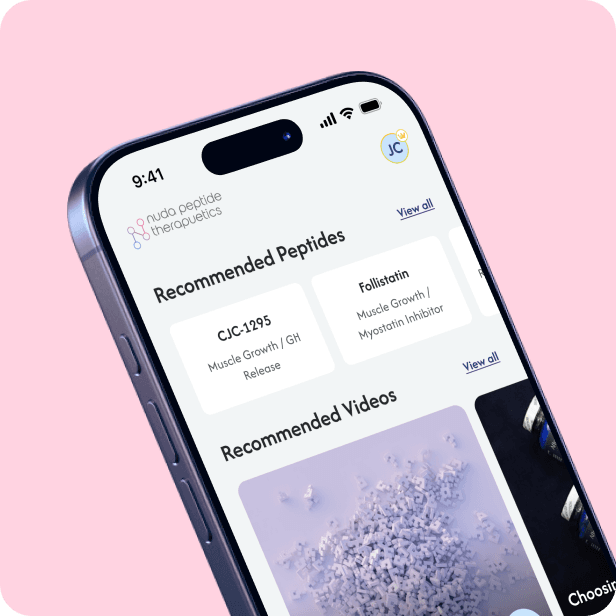
Peptide MD

Construction • GIS Web App

Peptide MD

A full-scale hazard management and asset tracking web platform for industrial power generation, petroleum, and construction environments. Real-time GIS mapping, work order management, and multi-site dashboards.

40%

Faster Incident Reporting

3x

User Adoption Rate

Inpso Hair Pro

Saloon App

Inpso Hair Pro

An AI-powered salon platform for hairstylists and beauty studios. Clients can preview hair color, length, hairstyles, and wig transformations. Features include AI styling recommendations, client management, and personalized beauty previews.

65%

Increase in Online Orders

2.1s

Page Load Speed

AI Technology Stack

Our Production AI Tech Stack Every Layer and Every Tool Explained

Every technology in our AI stack is chosen for production reliability, observability, and the ability to hire engineers who know these tools, not for novelty or hype.

GPT-5

GPT-5

Calude 4.7

Calude 4.7

Gemini 3.1

Gemini 3.1

Llama 4

Llama 4

Mistral MoE

Mistral MoE

Muse Spark

Muse Spark

Client Reviews

What Our Clients Say About Us

Verified reviews from startup founders who went from idea to live product with Maze Digital.

star imgstar imgstar imgstar imgstar img

Maze Digital launched WorkSafe on iOS and Android simultaneously in 8 weeks. Their design-first sprint approach meant development never waited on designs, and I received a working build I could test on my real phone after every two-week sprint. The RAG-based AI hazard classification they built passed our enterprise clients' security reviews on first assessment. This is a team that actually delivers what they scope.

Jonathan Reed

Jonathan Reed

CTO, WorkSafe Solutions

star imgstar imgstar imgstar imgstar img

We evaluated seven app development companies before choosing Maze Digital. What made them stand out was that they scoped the Alpha Arc MVP with us in a three-day session, showed us exactly what we would get and when, and then delivered it exactly on time at the agreed price. The AI coaching system they built using Claude reduced our Day 30 churn from 59% to 33%. 10,000 downloads in 90 days. Worth every dollar.

Mark S.

Mark S.

Founder, Alpha Arc

star imgstar imgstar imgstar imgstar img

The level of detail in their UI/UX work is truly exceptional. From the initial research phase to the final design, every aspect was meticulously structured, thoughtful, and centered around the user. They not only considered the aesthetic appeal but also ensured that the functionality was seamless and intuitive. Their commitment to understanding user needs led to innovative solutions that enhanced the overall experience, making it both engaging and efficient.

Jennie

Jennie

Book Writer

INDUSTRIES

AI Development Across Regulated and Complex Industries

AI performance is highly domain-specific. A medical AI system requires clinical accuracy standards, HIPAA compliance, and model cards. An industrial AI system must run offline on rugged hardware. We bring domain knowledge to every project.

Latest Insights

We share our thoughts on design and development

AI Development Questions Answered with Technical Accuracy

Real questions from technical decision-makers and founders, answered with current accuracy.

AI development is the engineering of the intelligence itself: collecting and structuring training data, designing model architectures, running training or fine-tuning on GPU infrastructure, evaluating model quality with domain-specific metrics, deploying models to production inference endpoints, and operating them with MLOps practices. AI app development is building the product surface that delivers AI capabilities to end users, such as a mobile app, web interface, or SaaS product that consumes an AI API. We do both: we build the AI system from the model layer up, and we build the product interfaces that deliver it.
LLM fine-tuning adapts a pre-trained large language model to your specific domain, task, or style by continuing its training on a curated dataset. We use LoRA (Low-Rank Adaptation) and QLoRA (Quantized LoRA) for parameter-efficient fine-tuning that achieves strong results without the full cost of training from scratch. Fine-tuning is useful when you need a specific tone or response style baked into the model, when you operate in a highly specialized domain where the base model underperforms on your evaluation metrics, when prompt engineering and RAG are not enough, or when long prompts are too expensive. We usually recommend RAG when the data changes frequently, source attribution is required, or you want the model to rely on your company documents rather than memorizing them.
OpenAI's latest API frontier model is GPT-5.5, Anthropic's latest generally available Opus model is Claude Opus 4.7, and Google's current Gemini 3.1 Pro is available across consumer and developer products. The right choice depends on your workload: GPT-5.5 is positioned for complex reasoning and coding, Claude Opus 4.7 is strong for long-running and multi-step professional work, and Gemini 3.1 Pro is designed for demanding tasks across the Gemini ecosystem. We select models based on accuracy, latency, context window, tool use, and cost rather than brand alone.
RAGAS (Retrieval Augmented Generation Assessment) is an evaluation framework for measuring the quality of RAG pipeline outputs across four core metrics. Faithfulness checks whether the LLM response stays grounded in the retrieved context. Answer Relevancy checks whether the response actually answers the question. Context Precision measures whether the retrieved chunks are truly relevant. Context Recall measures whether the retrieval step surfaced all the necessary context. We build a ground-truth evaluation set, run RAGAS against it before launch, and require target scores before production deployment.
Choose a commercial API when your data can legally leave your infrastructure, you need the highest-capability frontier model, you want minimal operational overhead, or your query volume does not justify the cost of self-hosting. Choose self-hosted Llama 4 when data residency rules or HIPAA-style requirements prevent sending data to external APIs, when you process very high query volume where per-token costs make self-hosting more economical, or when you need full control over inference and compliance. We deploy both patterns depending on security, cost, and performance requirements.
A model card is a structured document describing a model's intended use, training methodology, evaluation results, known limitations, and fairness analysis. We produce model cards for every AI system we ship. They typically include the architecture and training approach, dataset description and known gaps, evaluation results with confidence intervals, performance breakdowns across relevant subpopulations, failure modes and edge cases, intended use and scope, and fairness analysis for decisions that affect people. They are especially important for regulated or enterprise use cases.
Timeline depends on data readiness, model complexity, and evaluation requirements. A focused RAG pipeline project over an existing document corpus can take 6 to 10 weeks. A basic fine-tuning project can take 2 to 4 weeks for pipeline setup, evaluation, and initial training. A stronger LLM fine-tuning engagement usually takes 8 to 14 weeks, including dataset construction, labeling, training, evaluation, and deployment. A custom computer vision model from scratch can take 14 to 24 weeks depending on data collection and annotation needs.
Yes. We design and build HIPAA-compliant AI systems for healthcare clients. That usually includes self-hosted LLM deployment so patient data does not go to external API providers, PHI detection and redaction before model input, business associate agreements with vendors, AES-256 encryption at rest for training datasets and embeddings, TLS 1.3 in transit, RBAC for model and admin access, audit logs for every inference event, and automated session termination. We can also provide architecture documentation and security questionnaire responses for compliance reviews.